Your Fleet Might Be Losing Millions, And You Don't Even See It
Fleet operations lose millions not because they lack data, but because they lack systems that know when and how to act. Have organizations ever encountered these challenges? Yes, it's the same silent threat that contributes to the $1.4 trillion in unplanned downtime costs globally annually. In the automotive industry alone, a single hour of downtime can cost over $2 million.
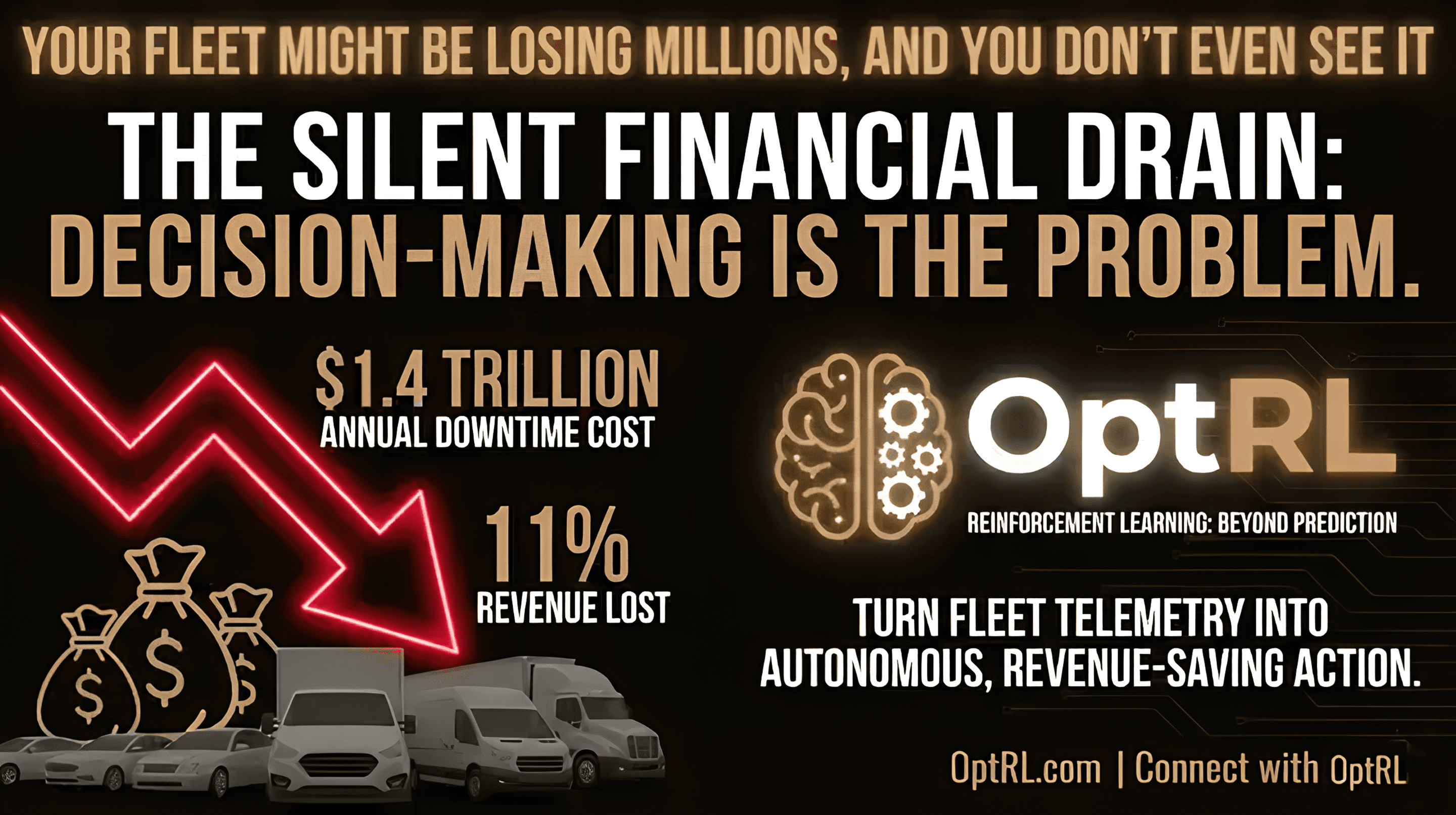
Unplanned downtime is not just an operational inconvenience. It is a silent financial drain.
According to Siemens' True Cost of Downtime study, the world's 500 largest companies lose approximately 11% of annual revenue to unplanned downtime, nearly $1.4 trillion globally every year. In automotive operations, a single hour of downtime can cost more than $2 million. Manufacturers alone are estimated to lose $50 billion annually due to unexpected equipment failures.
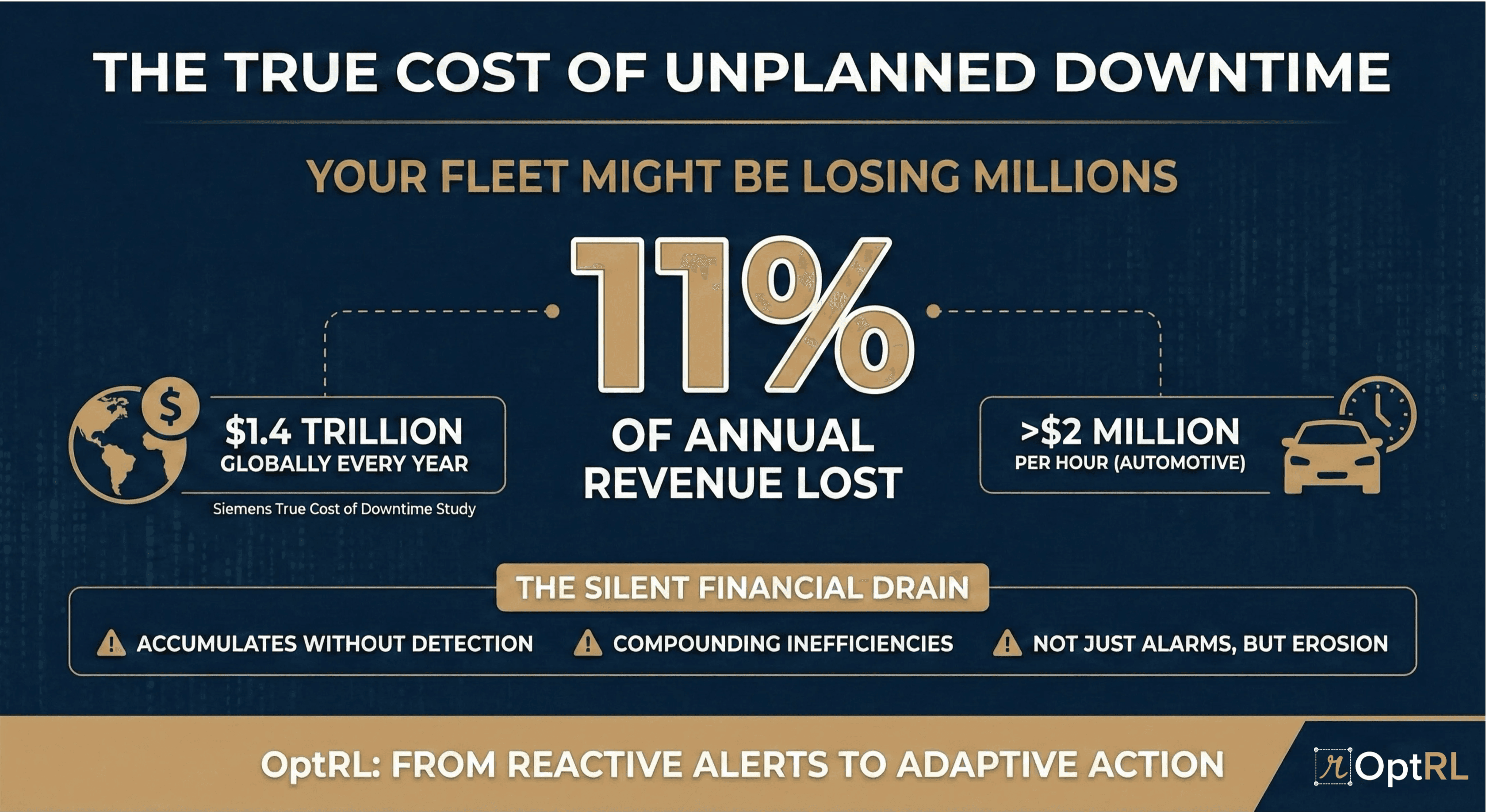
Now consider this carefully. If your fleet experiences even a fraction of that exposure, do you have complete visibility into where the losses originate? Or are you simply tracking surface-level indicators while deeper inefficiencies compound quietly?
The most dangerous operational losses are not the ones that trigger alarms. They are the ones that accumulate without detection.
Data Is Not the Problem; Decision-Making Is.
Today's electric and heavy-duty fleets generate enormous volumes of telemetry data, including battery health metrics, thermal data, charging cycles, diagnostic codes, trip analytics, firmware histories, load behaviour, and environmental signals. There is no shortage of visibility. And yet, critical operational decisions remain manual, reactive, and inconsistent.
Should a vehicle be removed from service? Is an anomaly meaningful or noise? Should firmware updates be deployed fleet-wide or in a staggered manner? Are we extending the battery's lifecycle or unintentionally accelerating its degradation?
Most organisations rely on threshold-based alerts and escalation workflows. These systems detect events. They do not optimise outcomes. There is a fundamental difference between recognising a problem and selecting the best course of action.
One informs. The other transforms performance.
The Executive Shift: From Prediction to Optimisation
Traditional AI systems answer the question: What is likely to happen?
Reinforcement Learning answers a far more strategic question: Given the current state of operations, what action maximises long-term business value?
This distinction matters at the board level. Fleet environments are dynamic, high-scale, and uncertain. Battery performance degrades non-linearly. Usage patterns shift daily. Environmental conditions fluctuate. Firmware updates introduce new variables.
Static rules cannot keep pace with this complexity. Reinforcement Learning is built precisely for environments where decisions must adapt continuously under uncertainty, balancing cost, safety, performance, and long-term return.
Reinforcement Learning in a Fleet Context
In enterprise operations, Reinforcement Learning becomes a strategic capability rather than a technical experiment. It allows you to move beyond simple monitoring to a structured, adaptive decision system.
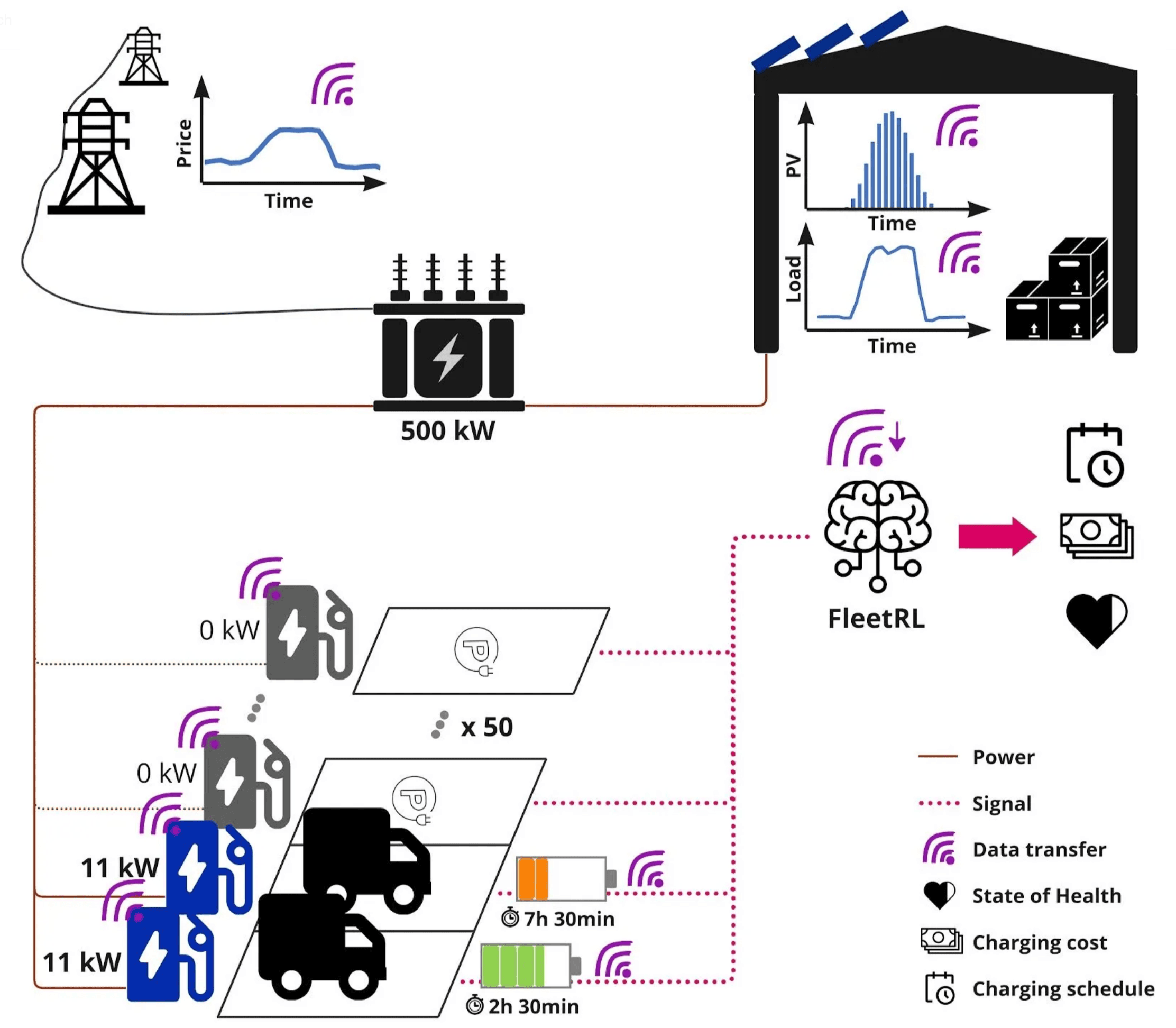
Here is how the technical architecture reshapes fleet operations:
Offline & Constrained RL: We enable organisations to learn from historical fleet data to identify which maintenance actions truly prevented costly breakdowns versus which interventions added expense without value. Crucially, this optimisation never compromises safety; agents dynamically manage battery behaviour within strict thermal and regulatory limits, extending lifecycle while protecting against catastrophic risk.
Hierarchical & Multi-Agent RL: This aligns edge-level intelligence with cloud-level strategy. Millisecond decisions protect assets in real time, while long-horizon policies optimise maintenance planning, staggered firmware rollouts, and load-aware deployment. What is optimal for one vehicle may be harmful for fleet continuity; coordinated learning prevents systemic disruptions.
Risk-Sensitive RL: Executives do not manage averages; they manage exposure. By explicitly accounting for worst-case operational scenarios, we shift the focus from average performance to downside protection. This reduces the likelihood of catastrophic events that damage both financial and reputational capital.
The Hidden Financial Leak
Many fleets already have IoT connectivity. They have telematics. They have dashboards. They have anomaly detection. But they do not have closed-loop decision intelligence. And that gap is expensive.
A vehicle may operate sub-optimally for months before degradation becomes visible. Firmware might introduce small efficiency losses that scale across thousands of units. Maintenance scheduling may be technically correct, but economically inefficient. Storage and cloud costs may rise quietly because signal prioritisation is static rather than optimised.
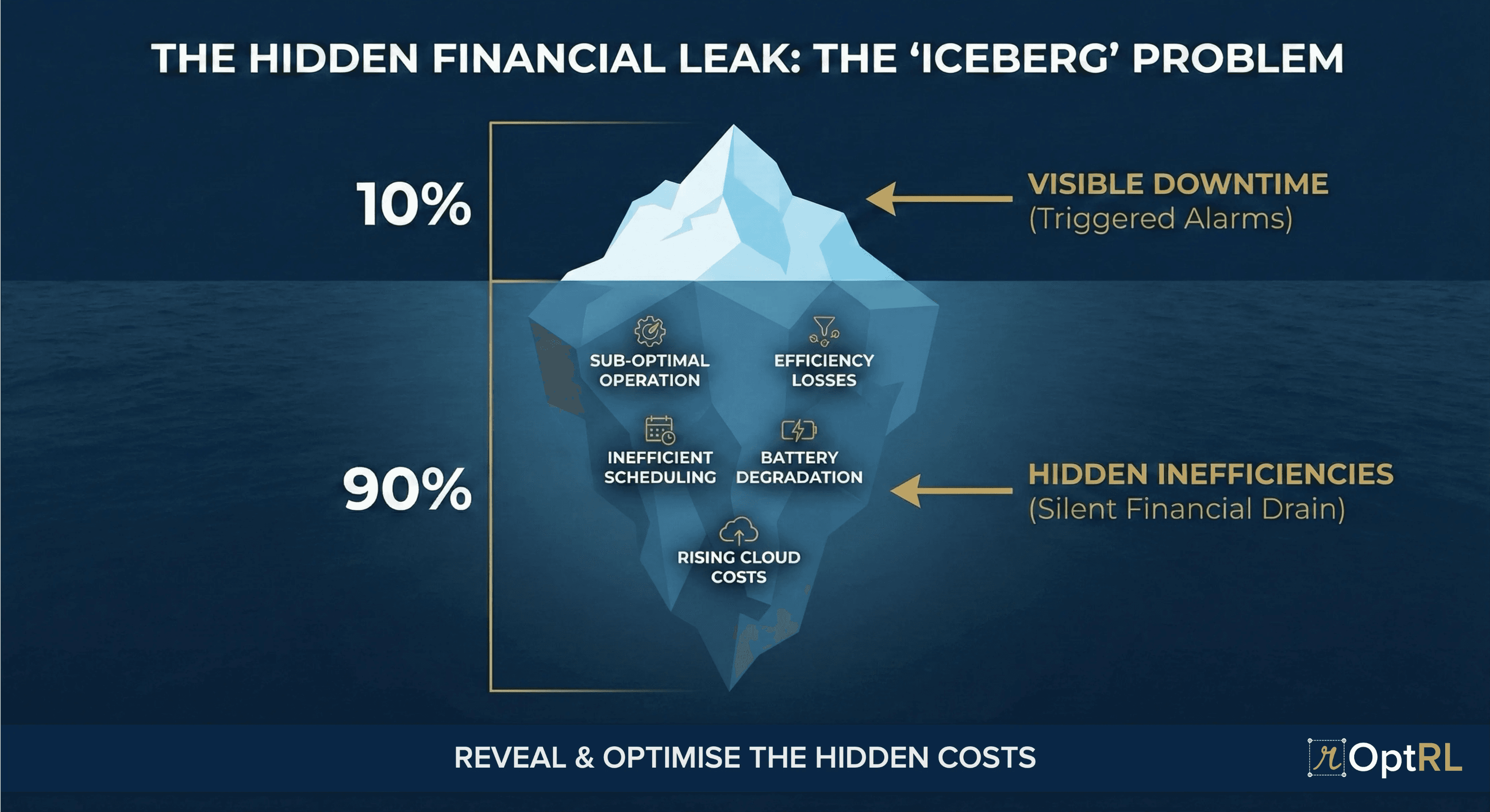
None of these triggers crisis alerts. Yet together, they erode the margin. The uncomfortable truth is this: Your fleet could already be losing millions, and the system may not be designed to reveal it.
From Connected to Intelligent
More sensors or more dashboards will not define the next phase of fleet transformation. It will be determined by systems that continuously learn from operational feedback and adapt their decision policies accordingly.
Connected fleets collect data. Intelligent fleets optimise action.
Predictive analytics flags risk. Reinforcement-driven systems decide what to do about it. Reactive maintenance protects against failure. Adaptive optimisation increases lifecycle value.
The organisations that lead the next decade will not be those with the most telemetry. They will be those with the most disciplined decision architecture. And the difference between the two is not visibility.
The financial upside of getting this right is massive.
You shouldn't have to choose between legacy, siloed software and a high-risk AI engineering project to capture those margins.
OptRL provides managed RL-as-a-Service; we deliver the power of continuous-learning AI as a fully managed, turnkey pipeline. We take on the heavy technical lifting, managing the complex multi-agent orchestration, running automated AgentOps policy evaluations, and executing real-time drift correction.
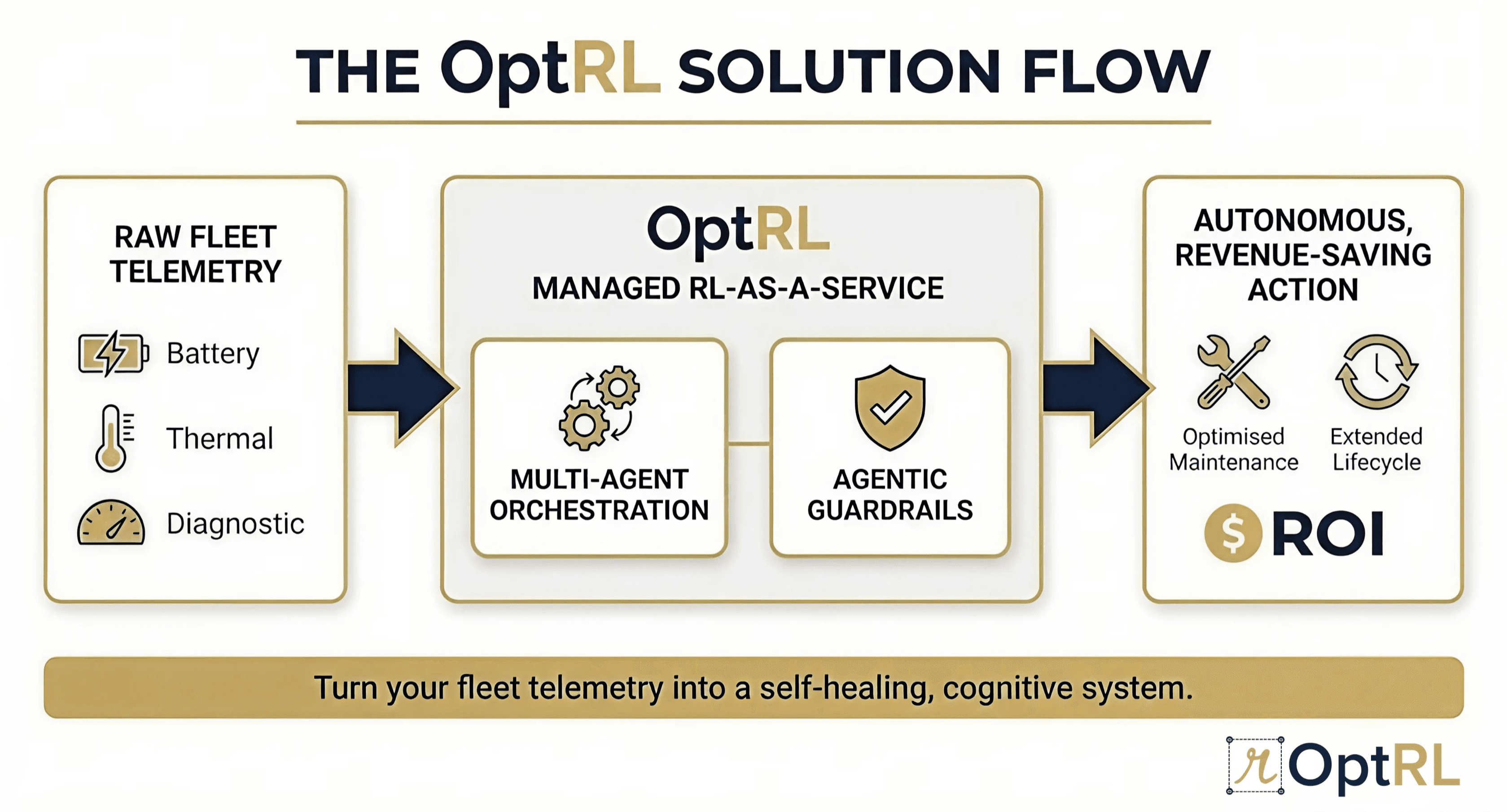
Your operations team inherits a production-grade, adaptive decision intelligence system secured by our Agentic Guardrails. The result? A self-healing, cognitive fleet that bypasses the AI talent gap and delivers measurable, hard-dollar ROI.
Connect with the OptRL team to see how Managed RL can turn your fleet telemetry into autonomous, revenue-saving action.